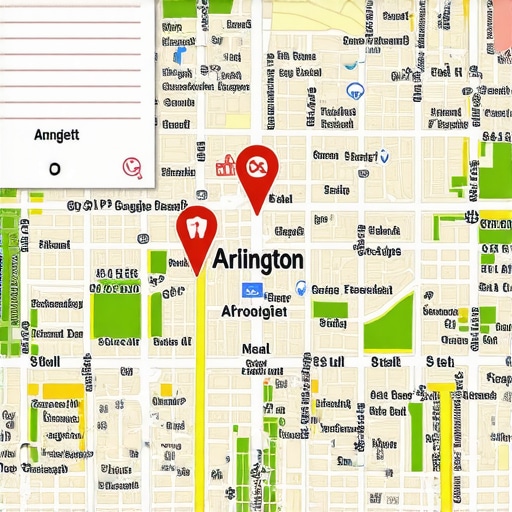
There was that moment when I realized my local business was invisible on the map. Despite offering great service and having loyal customers, potential clients searching for ‘Arlington best coffee shop’ kept walking past without a clue I was even there. It felt like shouting into the void—frustrating and downright embarrassing. Then I had my lightbulb moment: I needed to get my Google Maps listing right, big time. Since then, I’ve discovered some key tactics in Arlington local SEO that truly make a difference. And today, I want to help you break free from obscurity and stand out where it counts.
Why Local SEO Matters for Arlington Businesses Today
Arkansas history shows that local searches lead to conversions—nearly 78% of local mobile searches result in an offline purchase, according to data from Forbes. If you’re not optimizing your presence on Google Maps, you’re leaving money on the table. Especially in a vibrant city like Arlington, where competition is fierce and customers are actively searching for nearby options. I’ve seen firsthand how proper local SEO tactics boost visibility, drive foot traffic, and significantly grow revenue. It’s not just about being found; it’s about being the first choice. But I’ll admit, early on, I made a pretty rookie mistake by ignoring the basics—like neglecting consistent NAP (Name, Address, Phone number) info—which hampered my progress. You don’t want to make that same mistake!
Will This Really Make a Difference?
Absolutely. Implementing the right Arlington local SEO strategies has transformed my business, and I’ve seen others do the same by following proven steps. If you’re struggling with visibility, wonder if it’s worth the effort or simply feel overwhelmed, I get it. But trust me—small, consistent changes can lead to massive results. The real question is, have you faced the invisible wall when customers try to find you online? If so, read on. We’re about to dive into effective tactics backed by research and real-world success, so you can finally tap into more local traffic and boost your Google Maps rankings.
Claim and Optimize Your Google My Business Profile
The first concrete step I took was claiming my Google My Business (GMB) listing. I navigated to this guide to ensure I followed every required step. I verified my business through the postcard method, which took about five days, but once verified, I filled out all the details—business hours, categories, services, and a detailed description. Make your listing complete because incomplete profiles don’t rank well.
Use Consistent Local NAP Information
Having consistent Name, Address, and Phone number (NAP) across all online platforms was a game-changer. I audited my existing citations and updated any inconsistencies. Think of NAP as the address tag in a neighborhood; if it’s wrong in some places, search engines get confused. For Arlington-specific tactics, I leveraged these tips to synchronize my info everywhere, from Yelp to local directories. This step tightened my local footprint and improved my Google Maps rankings significantly.Many local businesses in Arlington believe that simply claiming their Google My Business (GMB) listing guarantees visibility. However, the real nuances lie in understanding what most people overlook. Contrary to the popular myth that optimizing your profile is a one-and-done process, ongoing adjustments and strategic insights are crucial for sustained success. One common mistake I see is overemphasizing keyword stuffing in business descriptions; instead, it’s more effective to focus on contextually relevant keywords sprinkled naturally throughout your profile and website content. This aligns with recent studies showing that keyword stuffing can actually harm local rankings, as Google detects and penalizes such practices. Additionally, many underestimate the importance of micro-moments and user intent when optimizing for Texas Maps SEO—understanding when potential customers are searching and tailoring your profile for those specific queries can dramatically increase your Google Maps visibility.
Another trap to avoid is neglecting the importance of local citations and inconsistent NAP (Name, Address, Phone number) data across platforms. While many believe that having a verified GMB is enough, inconsistent citation data causes confusion for search engines, negatively impacting your rankings. It’s a nuanced detail often dismissed but vital for Arlington local SEO; ensuring uniform NAP details everywhere signals reliability to Google, which in turn boosts your local pack presence. For advanced practitioners, integrating schema markup to highlight local business information can give you an edge—it’s an underutilized technique that helps search engines better understand your business’s context, improving visibility.
A misconception that still persists is that reviews are a minor factor in Google Maps rankings. In reality, reviews are both social proof and a ranking factor. Yet, many argue that generating reviews is about quantity rather than quality. From my experience, strategically encouraging satisfied customers to leave detailed, positive reviews relevant to Arlington-specific services has a far greater effect. Moreover, engaging with reviews publicly builds trust and signals activity to Google, which favors active profiles.
Now, consider this: how can you effectively analyze local competitors to understand where you might be missing opportunities? This type of competitive analysis requires a detailed look at their citation profiles, review strategies, and content quality. Using advanced tools or manual audits—like scrutinizing their Google Maps listing and local citations—can reveal gaps in your own approach. An often overlooked aspect is competitor mapping, which involves analyzing their placement in the local pack and understanding their backlink and citation strengths—an essential step if you want to dominate Arlington Google Maps rankings.
Integrating these nuanced tactics isn’t just about tweaking your profile—it’s about a comprehensive, strategic approach that leverages the most effective local SEO practices. You might think implementing a few adjustments is enough, but the truth is, mastery involves continuous refinement and understanding the sophisticated signals Google uses to rank your business. Want to ensure you’re not falling behind? Dive deeper into advanced strategies through resources like [this guide](https://arlingtonlocalseo.com/arlington-google-maps-optimization-proven-strategies-for-2024-success) and start elevating your Arlington business in the local search landscape.
Have you ever fallen into this trap? Let me know in the comments.Maintaining and scaling your Arlington Google Maps visibility requires more than just initial setup—you need reliable tools and consistent effort. One essential tool I swear by is BrightLocal, which I use daily to monitor my local citations and review profiles. Its local SEO audit feature provides detailed insights, helping me identify inconsistent NAP data and citation opportunities that can significantly affect my rankings. For managing reviews, I rely on GatherUp, which streamlines the review collection process and tracks customer feedback across platforms, ensuring my profiles stay active and trusted. These tools are part of my routine because they save time and keep my listings optimized without manual guesswork.
For analytics, I’m a big fan of SEMrush’s local SEO toolkit. Its Google Maps tracker allows me to see how my rankings fluctuate over time and identify which keywords or locations need extra attention. Consistent monitoring with these tools helps me react proactively—whether that’s updating citations, refining descriptions, or encouraging new reviews—so my visibility remains strong.
But tools alone aren’t enough; implementing proven methods boosts long-term results. For example, regularly verifying and updating your NAP information across all directories can prevent ranking drops. Additionally, scheduling monthly review requests keeps your profile active, which search engines interpret as engagement—an underrated factor in ranking algorithms. Remember, search engine trends point toward increasing importance of user engagement signals, so stay active with your reviews and profile updates.
Thinking ahead, the landscape of local SEO is always evolving. Future trends suggest AI-driven review analysis and voice search optimization will become more significant, requiring tools that adapt accordingly. For now, investing in the right software like BrightLocal and GatherUp can provide the edge needed to dominate Arlington Google Maps and Texas Maps SEO.
### How do I maintain my local business visibility over time?
Consistency is key. Keep your NAP information accurate everywhere, respond actively to reviews, and schedule regular audits using your trusted tools. If you’re serious about ongoing success, I recommend trying out SEMrush’s local SEO features to track your ranking shifts and identify new opportunities—it’s a game-changer. Implementing these strategies can take your local SEO from stagnant to thriving. Want to see real results? Dive into this guide on effective Texas Maps SEO strategies and start applying advanced techniques today.
Lessons Other Experts Might Try to Keep Quiet About
One of the biggest wake-up calls for me was realizing how easily overlooked micro-moments can be in local SEO. I once believed that a well-optimized profile was enough, but then I discovered that timing your content and review strategies around customer search behavior dramatically improved visibility. It’s about peeling back layers—things like user intent and local competition nuances that most overlook—these small details have a huge ripple effect.
Another lightbulb moment was understanding that citations need more than just listing your business. The consistency of NAP data across all platforms is crucial. I learned that even a tiny discrepancy can cause Google to doubt your authenticity, which hampers rankings in Arlington and beyond. This insight pushed me to double down on audits and synchronization, realizing that success hinges on even the smallest data points aligning perfectly.
Lastly, I underestimated the power of reviews—not just the quantity but the quality and engagement inherent in authentic feedback from local customers. Engaging with reviews openly proved to be a social proof booster as well as a ranking factor. Encouraging satisfied clients to share detailed, location-specific reviews transformed my reputation and search standing.
Tools That Made a Difference in My Local SEO Playbook
BrightLocal has been indispensable for tracking citations and audits, offering actionable insights that keep my listings sharp. I trust it because it simplifies complex data into manageable tasks, saving me time and avoiding costly errors. GatherUp is my go-to for gathering and managing customer reviews; its functionality makes review generation natural and effective. For competitive analysis and ranking monitoring, SEMrush’s local SEO toolkit provides real-time data and strategic recommendations. These tools form the backbone of my ongoing efforts, ensuring I stay ahead in Arlington’s competitive scene.
Additionally, I’ve found that integrating schema markup via detailed local business information helps search engines contextualize my business better. This underused technique gives me an edge over less strategic competitors, making my listing resonate stronger in local search results.
Now, Your Turn to Elevate Your Local Presence
Remember, effective local SEO isn’t about quick fixes; it’s a continuous journey of refinement and learning. If you’re committed to standing out on Google Maps and attracting local customers in Arlington, start small but stay consistent. Dive into the detailed guides available, leverage powerful tools, and embrace the nuances that make your business unique. The future of local search favors those who understand that visibility is earned daily—not just claimed once.
What’s the biggest challenge you face in optimizing your Google Maps presence? Share your experiences in the comments—let’s grow together!